
Fulbright Visiting Scholar Program Spotlight: Uranela Demaj
Seeking admission to a prestigious program like Fulbright Visiting Scholar requires a lot of preparation. To help you better understand the program and what it offers, we bring an insider’s perspective on the Fulbright Journey.
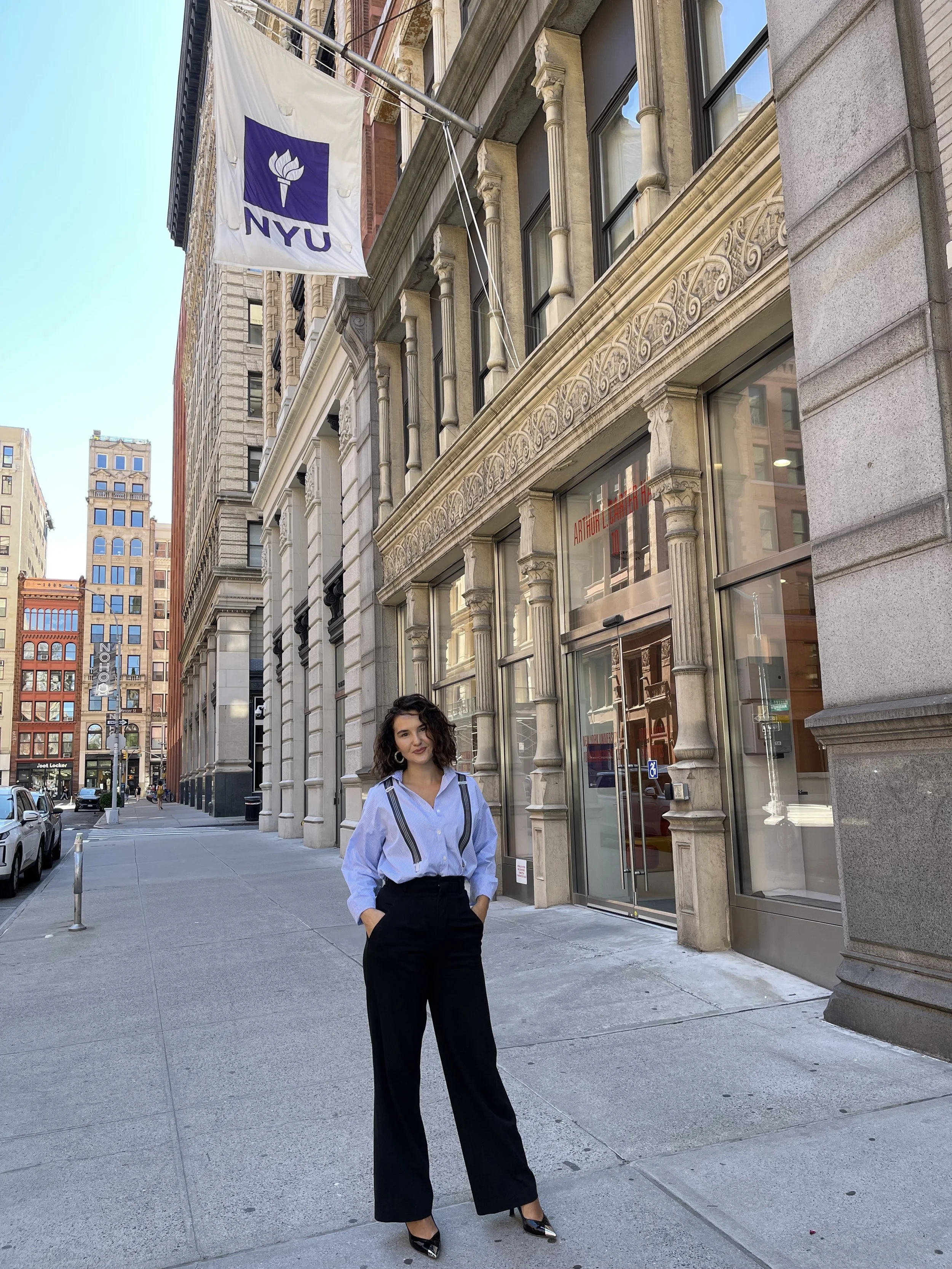
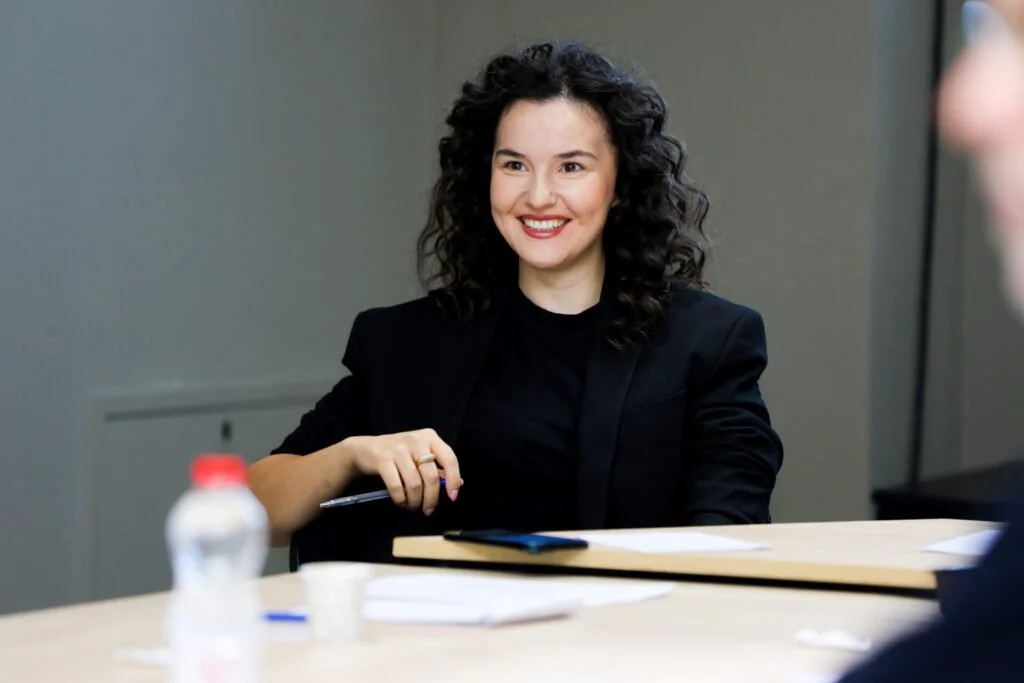
We are continuing our Spotlight series with our Fulbright Visiting Scholar grantee, Uranela Demaj, a 2025/2026 Fulbright Visiting Scholar at New York University.
For information on upcoming application cycles, please visit our website and the U.S. Embassy in Kosovo website (usembassy.gov). This is a joint program of the U.S. Department of State and the Government of Kosovo.
1. What is your educational and professional background?
I hold a PhD in sociolinguistics from Ghent University in Belgium and currently serve as Assistant Professor of sociolinguistics at AAB College in Prishtina, where I have been teaching and conducting research for over a decade. In addition to my academic role, I have held senior leadership positions at the institution, including Vice-Rector for Science and Research and, prior to that, Vice-Dean of the Faculty of Foreign Languages. My academic work focuses on language policy, semiotic landscapes, and national identity, with a particular emphasis on Kosovo and the Western Balkans. More recently, my research has expanded to examine diaspora contexts, specifically the role of language in the construction of identity, belonging, and transnational ties within Albanian communities abroad including the United States. Alongside teaching and research, my work bridges empirical sociolinguistic inquiry with questions of language, human rights, and education, often engaging directly with policy processes and public institutions. I have worked closely with the United Nations in Kosovo, the International Organization for Migration (IOM), the Office of the Prime Minister - Office of the Language Commissioner, and civil society organizations such as the Human Rights Network (HRN) and ETEA. This dimension of my work is especially important to me because it allows research to remain anchored in real-life issues that directly affect people and communities.
2. Why did you choose to apply for the Fulbright Program?
I applied to the Fulbright Program primarily to pursue my research on language and Albanian diaspora communities in the United States. A central component of my work is ethnographic fieldwork, which requires sustained immersion in the communities being studied. This meant that I had to be in the United States to be able to carry out the research. Furthermore, having grown up in the diaspora myself since the age of two before moving to Kosovo in adulthood, I have personal experience with the sensitivities and complexities that shape diasporic life. This background informed my desire to carry out research from within the community and to observe as closely as possible the everyday linguistic and social realities of Albanians in the United States. At the same time, my choice was also driven by the academic environment; New York offers one of the strongest research environments in the world, particularly in sociolinguistics and linguistic anthropology. The opportunity to conduct diaspora research while being embedded in such an intellectually rigorous setting has been a defining highlight of my academic journey here.
3. Tell us about your experience as a Fulbrighter in the U.S.?
My Fulbright experience at New York University has been intellectually enriching and deeply formative. Being part of this environment has exposed me to new conversations and interdisciplinary perspectives that I would not have encountered otherwise. At the same time, I have been able to engage closely with the Albanian diaspora community and with scholars working on diaspora, language policy, and linguistic anthropology. This combination has broadened how I understand my own work and has influenced the way I think about my own research. Beyond research, the experience has also been personally very grounding. These past months have offered space for reflection and have allowed me to think more deliberately about my long-term academic direction.
4. What is the most valuable component you have gained from the program?
The most valuable component has been a sense of sustained intellectual clarity. The Fulbright program gave me uninterrupted time to think, write, and engage in ongoing conversations with US and other international scholars in my own field and beyond. In ways that will likely become even clearer once I return home and gain distance from the experience, this period has sharpened my own academic positioning.
5. How was the application process for you, and what tips do you have for the prospective candidates?
The application process was demanding because it forced me to be very clear about my research goals from the outset. In particular, I had to be clear and articulate about why my project needed to be carried out in the United States and what kind of access and intellectual environment it required. In other words, this is not something that could be improvised as it required careful thinking and a coherent research plan. My advice to prospective candidates is to start early and take the project seriously from the beginning. Reaching out to the prospective host institution well in advance is also essential as this facilitates both the application and the research experience itself.
6. What is the biggest culture shock you experienced in the U.S?
Being based in Manhattan, New York City, the biggest culture shock for me was the sheer scale of the city and the pace at which people live and work. Everything moves quickly, often simultaneously, and there is a sense of constant motion that is difficult to grasp until you experience it firsthand. People appear to be continuously working, commuting, planning, and moving on to the next task. Coming from a European context, where academic and everyday life follow a different rhythm, this intensity was striking. At the same time, being immersed in this fast-paced environment was certainly also energizing and offered insight into how productivity, ambition, and time are understood in the United States.
7. What is your favorite place you have visited while participating in the Fulbright program?
Without a doubt, my favorite places in New York City have been Greenwich Village and Harlem. They are very different neighborhoods, yet together they captured, for me, the essence of the city. Greenwich Village, where NYU is located, became part of my everyday academic life. Washington Square Park, in particular, felt like the intellectual and social center of that experience. The presence of musicians, performers, students, and passersby created a constant sense of movement and creativity, making it a space where academic life blended seamlessly with the city’s cultural energy. Moving through nearby streets such as Mercer, Greene, Spring Street, and West Broadway, which connect the Village to SoHo, reinforced that feeling of being immersed in a vibrant urban, intellectual and artistic landscape. Harlem, on the other hand, is where I lived. It is a deeply multicultural neighborhood with a strong sense of history and community, and its rhythm and social life were very different from my own background. Living there offered a more intimate experience of New York. While I also spent time in Midtown, which reflects the city’s more touristic side, it was in Greenwich Village and Harlem that I felt I was experiencing New York as it is actually lived.
8. What is your favorite American dish/food?
If I had to single out one food that best represents my experience in the U.S., it would be pizza. In New York, eating pizza is really seen as a social practice shared across spheres, and so it has been inherent to all of the gatherings and events I attended while here.