
Inside Kosovo’s Sporting Spirit with Fulbright Scholar: Megan Chawansky
Dr. Megan Chawansky was a 2025/2026 Fulbright U.S. Scholar at the University of Prishtina’s Faculty of Physical Education and Sports, where she explored how coaches in Kosova build resilience in their athletes. Welcomed by faculty, students, and members of the sports community, Megan found meaningful support that enriched both her research and daily life. From collaborating closely with her student assistant to discovering Kosova’s vibrant sporting culture, her experience deepened her understanding of sport, identity, and community. Megan returns home with lasting friendships, renewed purpose in her work, and a strong connection to Kosova’s sporting spirit.
The Fulbright U.S. Scholar Program brings American academics and professionals to Kosovo to teach, conduct research, and collaborate with local institutions, strengthening long‑term partnerships between the United States and Kosovo.
This program is jointly funded by the U.S. Department of State and the Government of Kosovo.
1. Could you tell us about your research focus or academic field during your Fulbright experience? My research was focused on understanding how sport coaches in Kosovo build resilient athletes. More specifically, I wanted to know how coaches in Kosovo intentionally build resilient athletes and teams through their coaching methods and tactics. I also explored if and how the larger historical and political context of Kosovo influenced their coaching methods and tactics.
2. What were your first impressions of Kosovo, and how did they evolve over time?
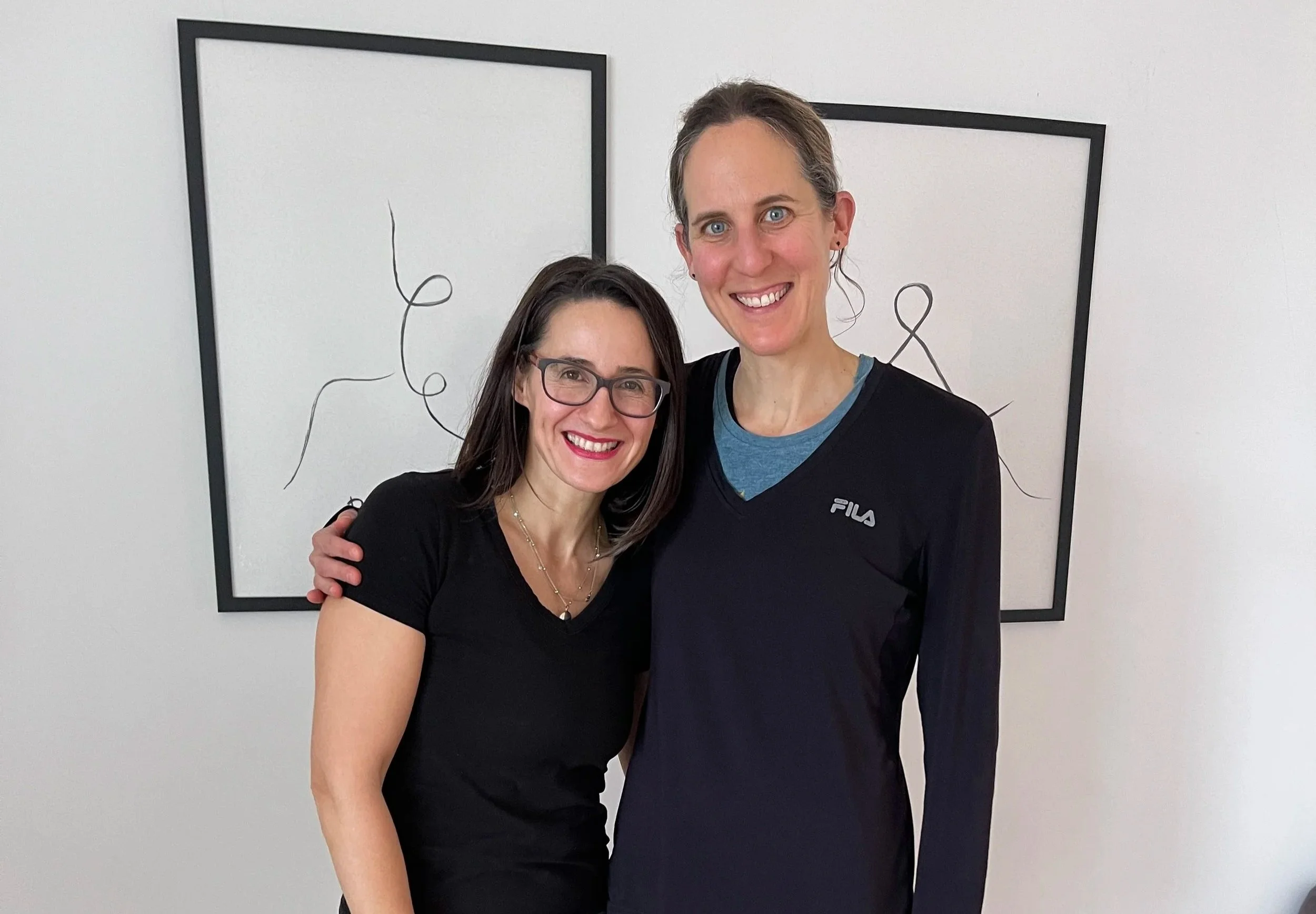
My first impressions of Kosovo were very positive. Everyone I met went out of their way to make me feel welcome and supported during my stay. Even before I arrived, my contacts assured me that I would feel welcome and taken care of during my time, and that held true. When I arrived in Kosovo, I knew no one. I left with many friends.
3. How did your experience in Kosovo influence your teaching, research, or professional perspective? My experiences in Kosovo reminded me of the importance of research into the sociocultural and management sides of sport. The interviews I conducted with sport coaches revealed a great deal about how hard coaches work to support their athletes. It also helped to highlight the little and big things that can be done to make sure coaches are supported and able to do the best they can.
4. What was it like collaborating with Kosovar students, faculty, or institutions?
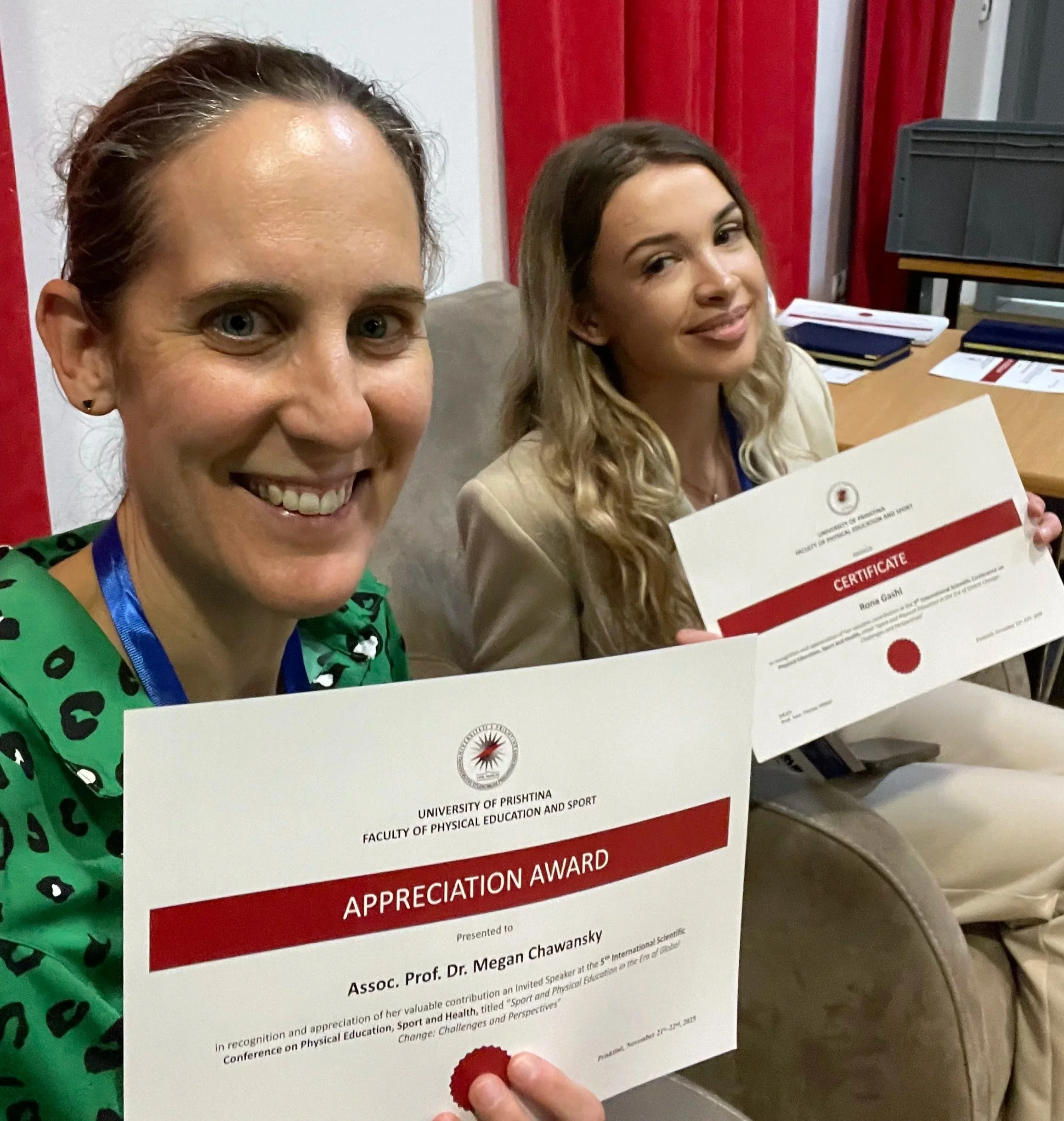
Was there a moment that stood out to you? I feel so fortunate to have been located in the Faculty of Physical Education and Sports at the University of Prishtina! My colleagues there made me feel very welcome, and they went out of their way to help me with my research. I also benefitted from the support of the Kosovo Basketball Federation, and in particular, Elvira Dushku and Granit Rugova. Finally, I benefitted from working closely with my student research assistant, Ms. Rona Gashi. My project would not have been successful without her diligence and dedication. My favorite moment was presenting our research together at the Faculty’s annual conference.
5. Did this exchange challenge or reshape any assumptions you had before coming to Kosova? I had heard that Kosova had a positive and special relationship with the USA, and this was affirmed during my time in Kosova. I also had some assumptions about the energy and youthfulness of the capital city, and this was confirmed. I loved living in Prishtina, where there was always something new to do but also always a familiar face.
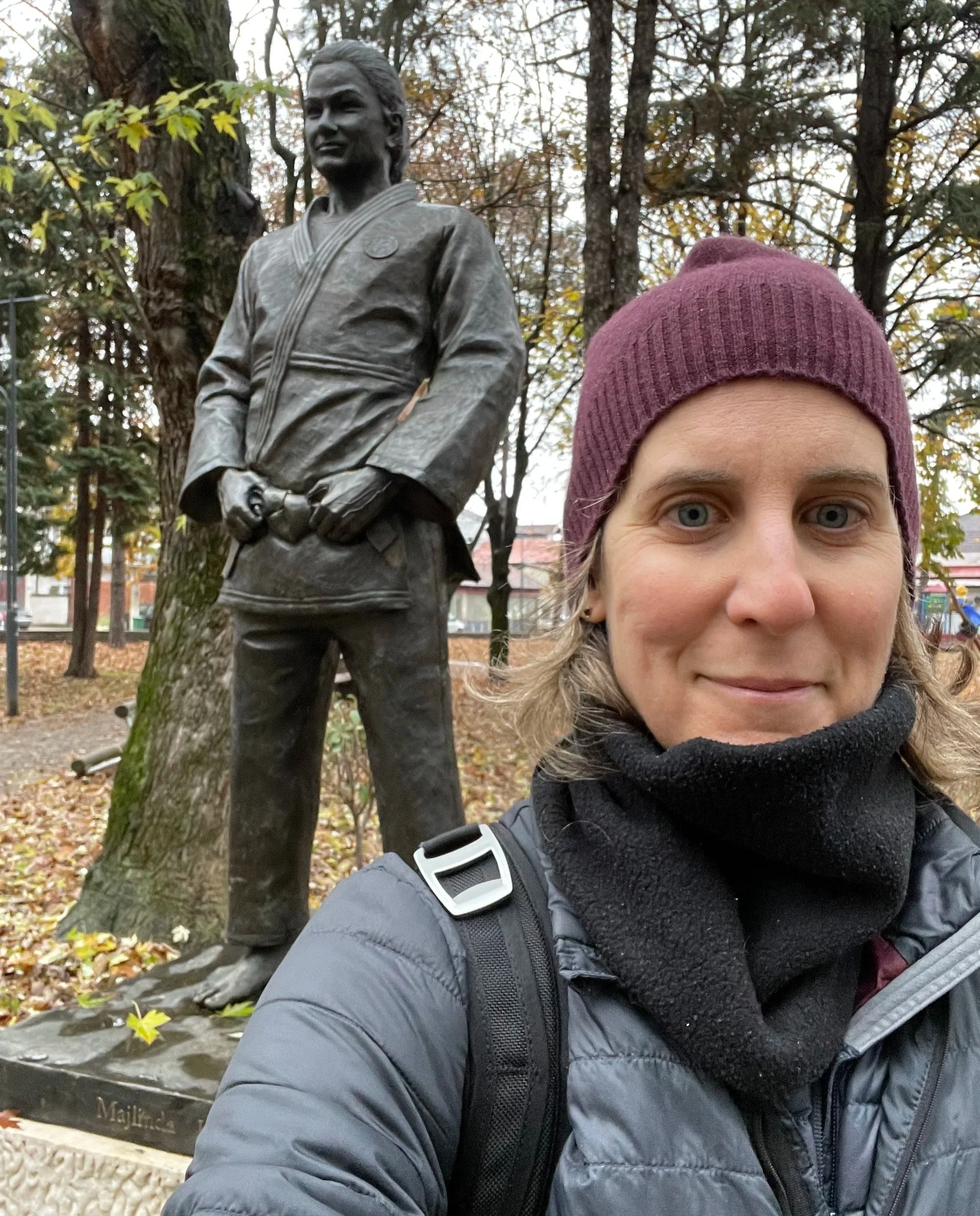
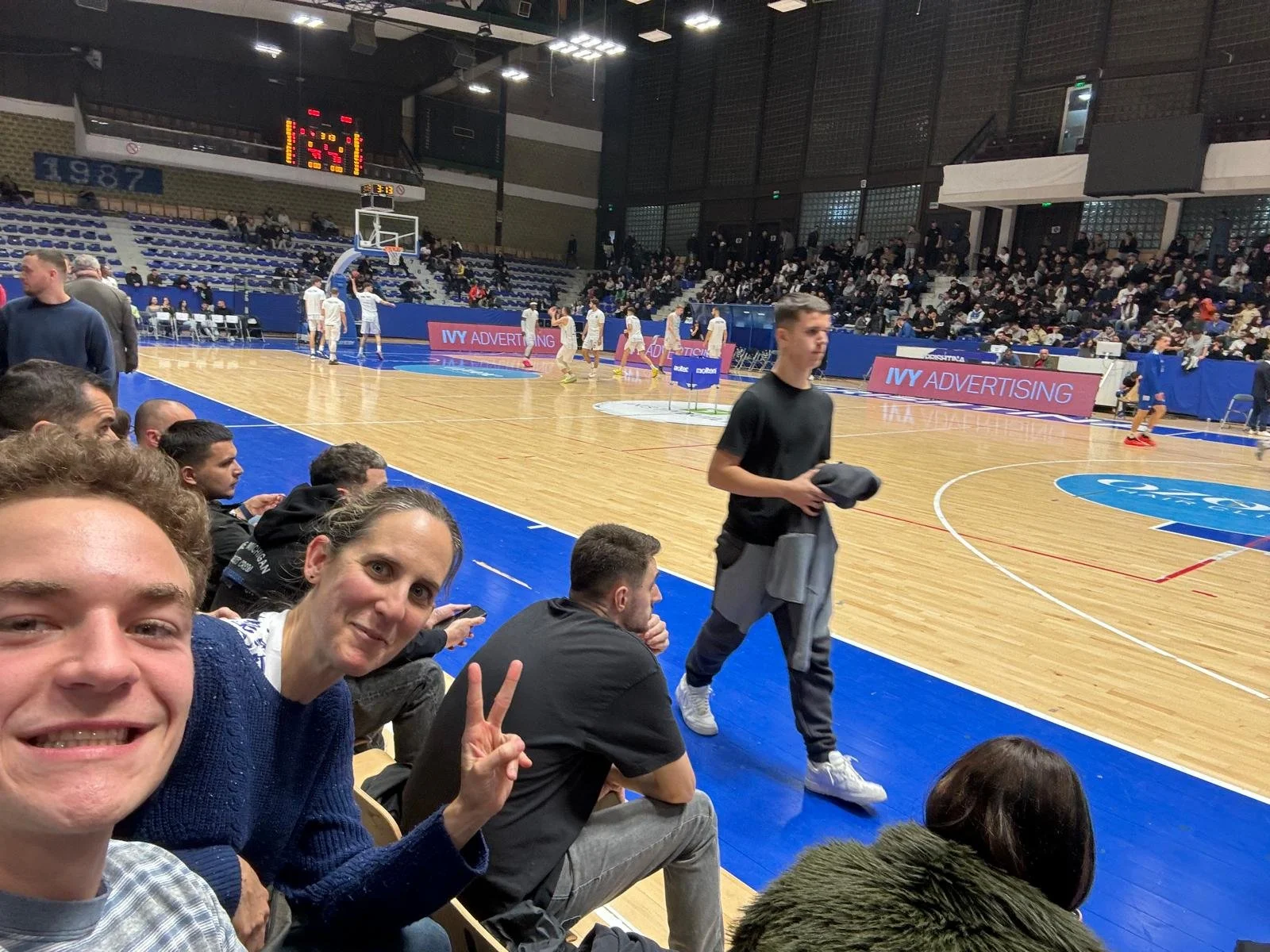
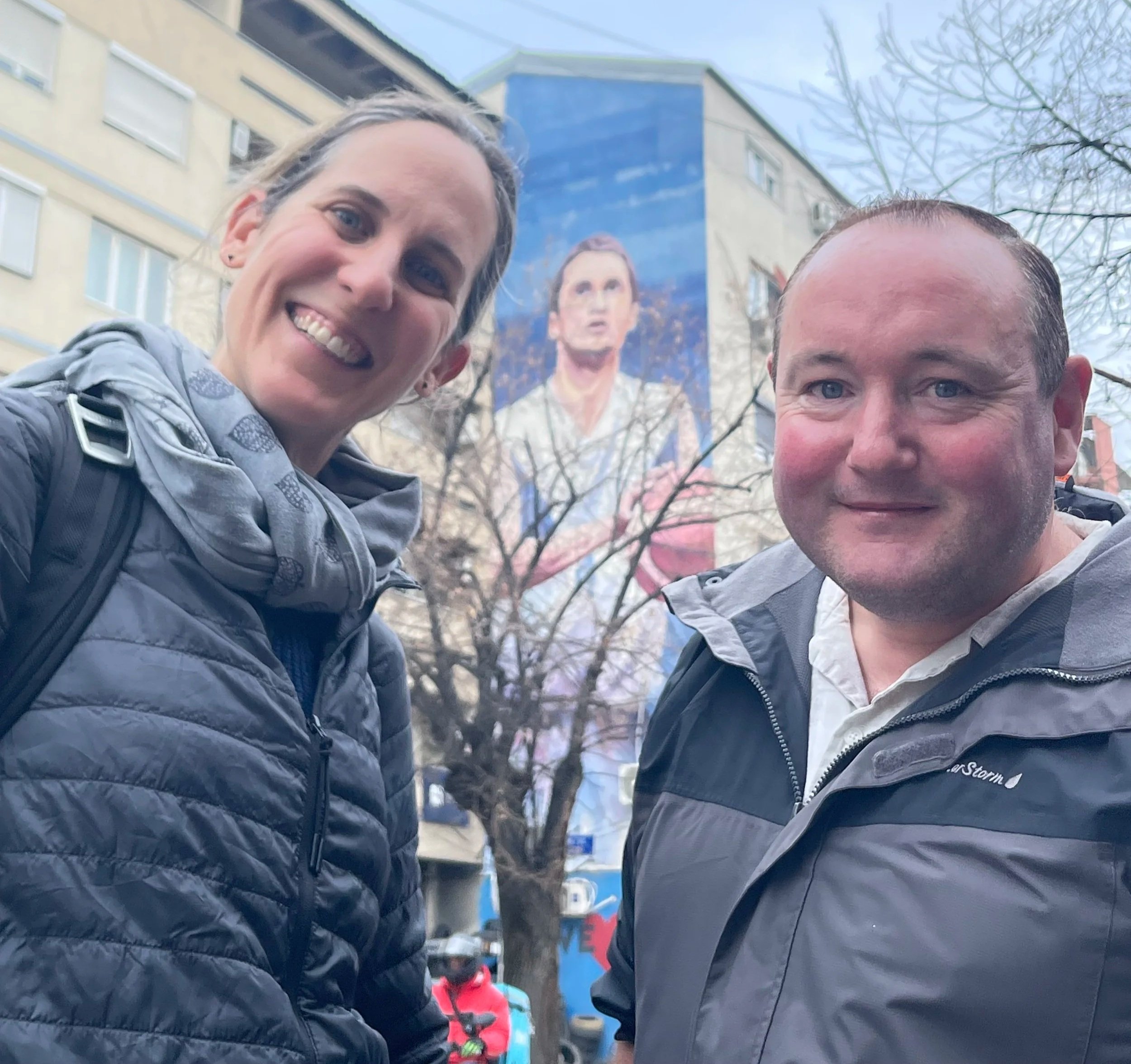
6. Can you share a favorite memory or everyday moment that captures your time here? My favorite memory was when I decided to have a little adventure and took the train to Peja. I went there to watch two women’s Superliga basketball games. I also was able to get a selfie with the statue of Judoka GOAT (Greatest of All Time), Majlinda Kelmendi.
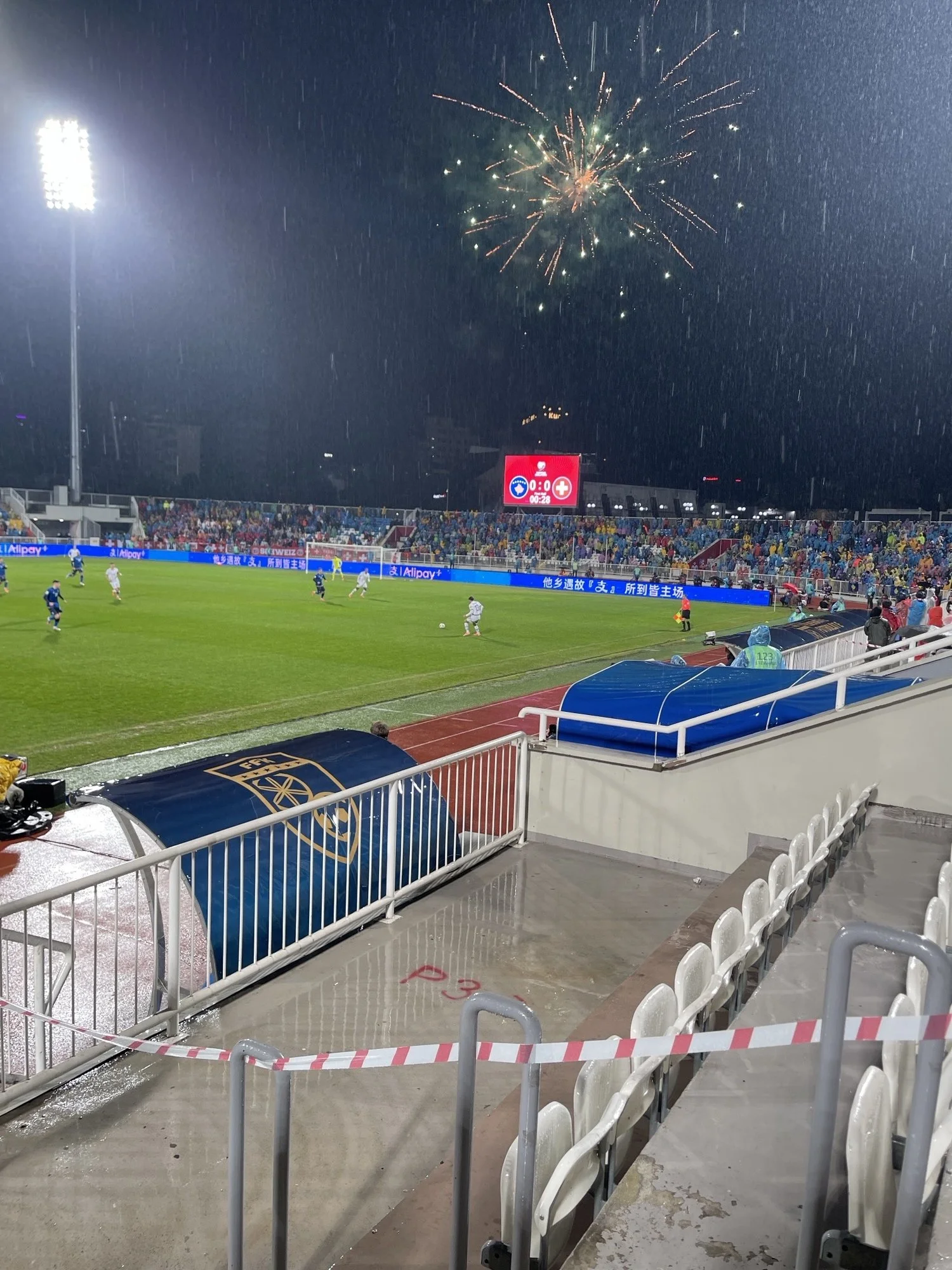
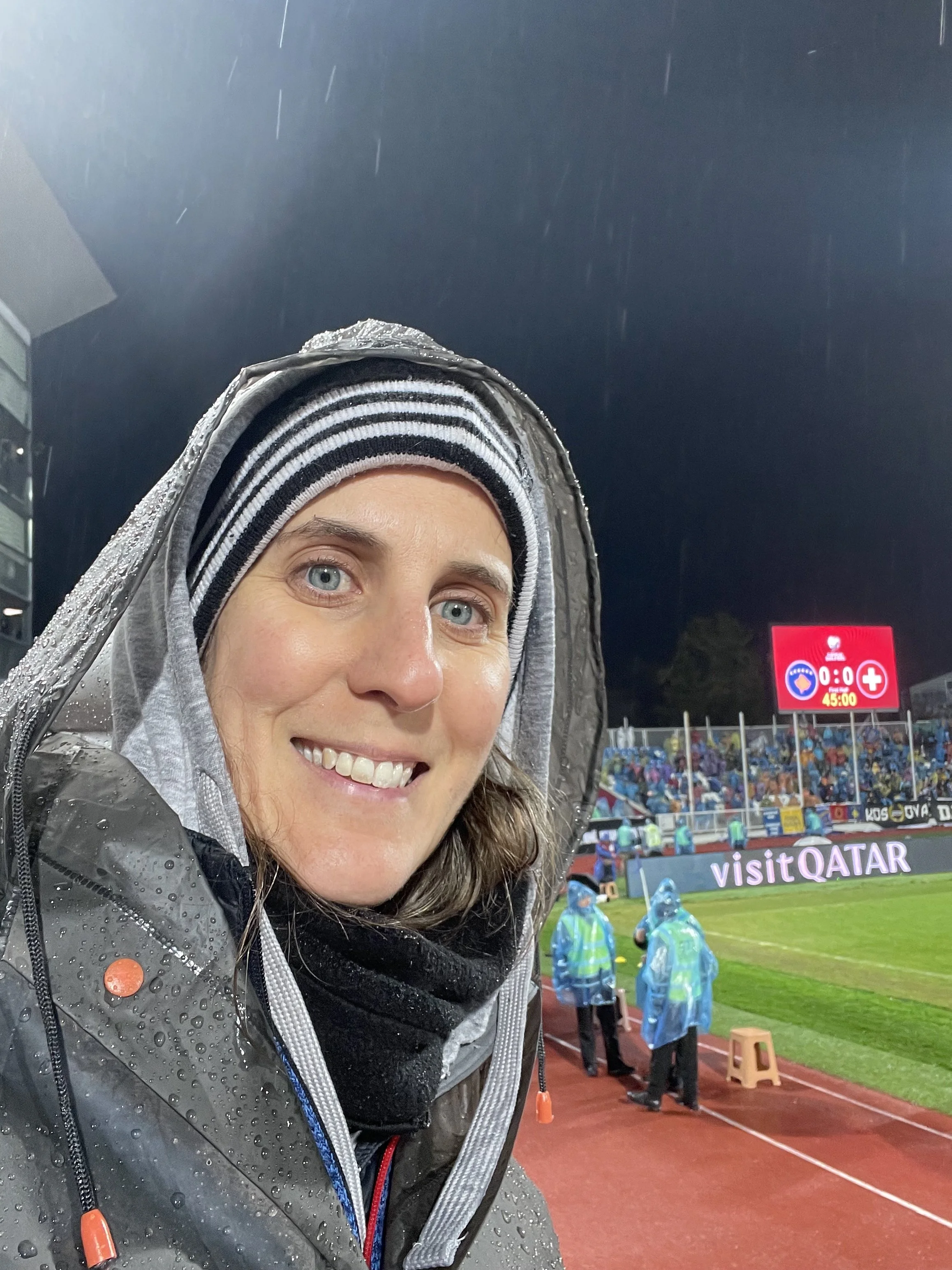
7. What cultural experience or tradition in Kosova left the strongest impression on you? I went to see the Kosova–Switzerland football match, and this left the strongest impression on me. Fans were lined up and committed to supporting their team, despite the rain and cold weather. It reminded me of the importance of sport in cultivating national identities and traditions.
8. In what ways do you feel this Fulbright experience contributed to mutual understanding between Kosova and the United States? I believe I am able to help educate my fellow Americans on some of what Kosova stands for and means to the world as a result of this experience. I hope those that I met in Kosova felt that I answered questions and clarified understandings that they had about the US. It was easy to connect with my new friends in Kosova, as I believe we share many common values.
9. What makes Kosova a meaningful or unique host country for the Fulbright U.S. Scholar Program? Kosova is a meaningful host country for the Fulbright U.S. Scholar Program in that you will receive support from everyone you meet. I do believe everyone wanted my research project to be successful and for me to enjoy my time in Kosova, and they did what they could to support me.
10. What will you carry with you from Kosova - personally or professionally - after this experience? I met some great friends that I hope I will see again. As I was leaving to say goodbye to some of these people, many asked when I would come back, and I hope to be able to return soon!
11. What advice would you give future Fulbright U.S. Scholars considering Kosova?
Go into your experiences in Kosova with an open heart and open mind. Let the country and its people welcome and support you. The country - and Prishtina in particular - has a big-city perspective with a small-town feel, and you can be successful in your endeavors there.