
Inside the Fulbright ETA Experience in Kosovo: Kaylin Ong

Kaylin Ong is a Fulbright English Teaching Assistant (ETA) at the American Advising Center, affiliated with the University of Prishtina’s Faculty of Education. Since arriving in Kosovo in September 2025, she has been struck by the strong sense of community and the warmth of the people she has met. Over time, she has grown to love the country’s creativity, curiosity, and vibrant café culture, as well as the ways young people actively engage in social and political advocacy within their communities. Through advanced writing workshops, standardized test preparation, and college advising sessions, Kaylin works closely with highly accomplished high school students from across Kosovo.
The Fulbright English Teaching Assistant (ETA) Program places U.S. students in classrooms in Kosovo to support local English teaching staff while teaching the language and serving as cultural ambassadors for the United States.
This program is jointly funded by the U.S. Department of State and the Government of Kosovo.
Please introduce yourself by briefly sharing who you are, where you are currently teaching, and the name of your host institution: My name is Kaylin Ong, and I’m an ETA at the American Advising Center affiliated with the University of Prishtina’s Faculty of Education, where I host advanced writing workshops, standardized test prep classes, and college advising sessions for highly accomplished high school students from all around Kosovo. I’ve been in Kosovo since September 2025.
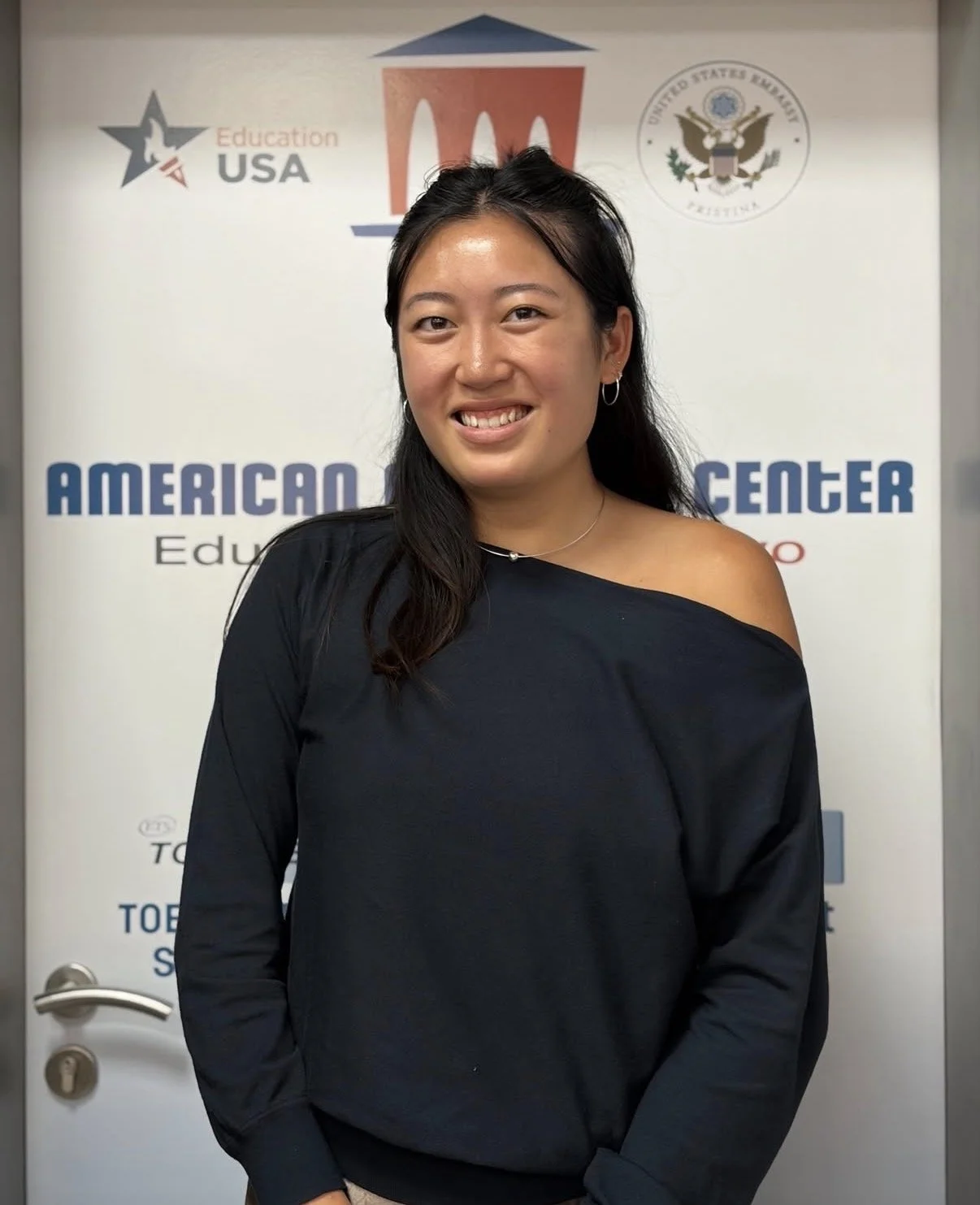
What was your very first impression when you arrived in Kosovo? My first impression was that the people in Kosovo are very social and community‑oriented. They take care of each other and spend time together, especially when the weather is nice and sunny. Seeing a lot of young people and families made me feel more comfortable when first getting acquainted with Prishtina.
What’s one thing about life here that you’ve really grown to love? People here are so creative and curious. I’ve enjoyed spending time with local artists, business owners, and non‑profit organizations. I feel particularly inspired when I get the opportunity to meet other young people who are very interested in and involved in social and political advocacy within their community.
How would you describe your students in one word – and why? Inspiring. I learn a lot from my students, from what classic works of literature they’re reading and what philosophers are influencing their current thinking, to what Albanian music they listen to and their favorite food spots in Prishtina.
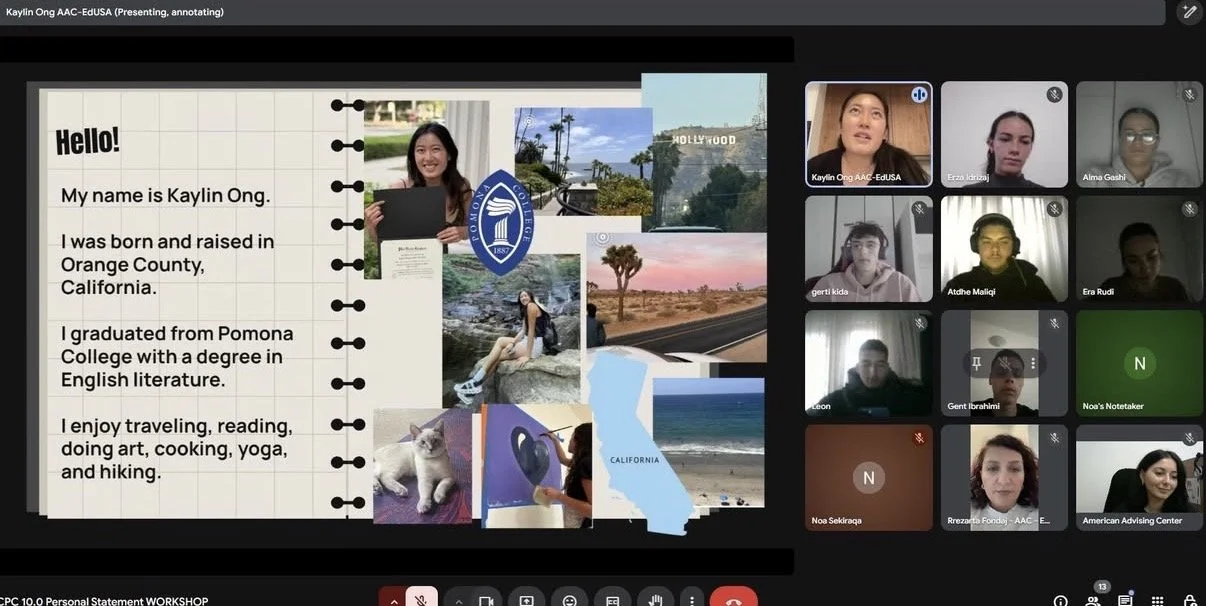
What’s been your favorite classroom moment so far? I gave my students a creative non‑fiction prompt in preparation for their college personal statement writing. It was titled, “Hauntology: Who haunts your thinking?” Off the top of my head, I remember John Locke, Dwight Eisenhower, Adolf Hitler, Franz Kafka, Che Guevara, and a character from Peaky Blinders. They asked me the same question. My students are brilliant, and I love when they volley my own questions back toward me. I was actually thinking about it while walking down the street earlier that afternoon. It would probably be Joan Didion. Next class, we read the essays “On Self‑Respect” and “Why I Write” by Didion together. It was a really special experience to revisit some of my favorite works with them.
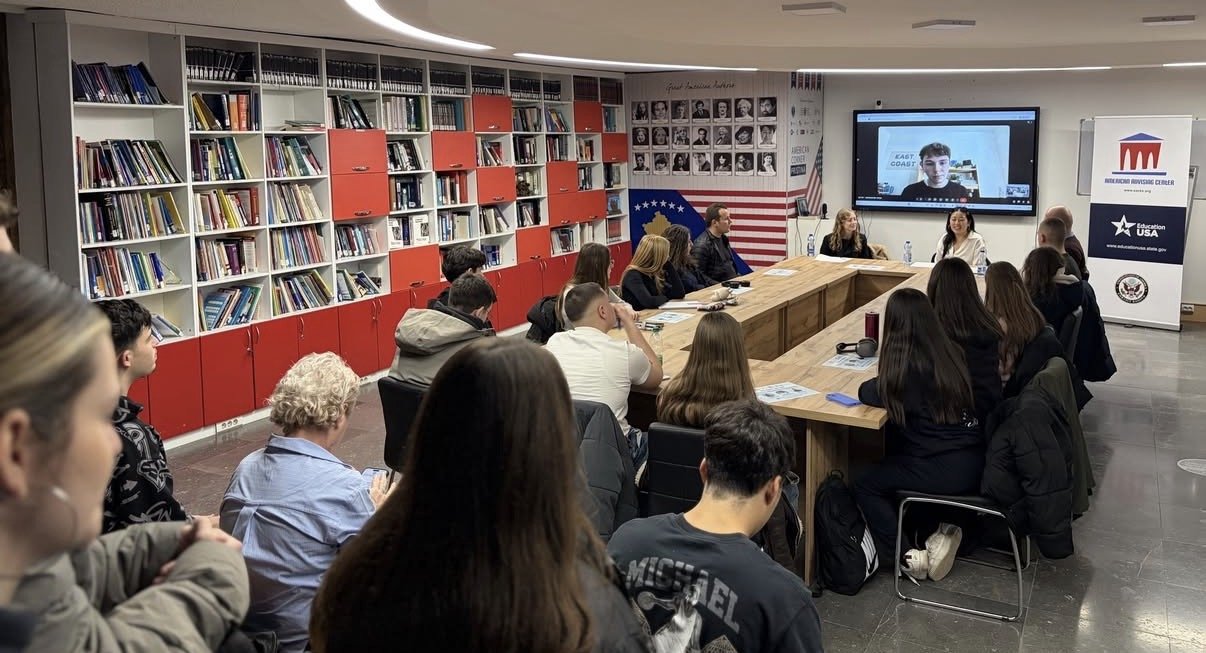
What’s one cultural difference that surprised you - in a good way? People here know how to relax and are generous with their time spent with one another. They invest in relationships with their friends and family, and even strangers. I feel that there is a very generous spirit and outlook that I’d like to take with me back to the US.
Is there a word, phrase, or tradition from Kosova you’ve picked up and use often?Coffee culture! I think this is something that the US could really learn from and benefit from. A lot of interesting conversations and new friendships are facilitated by a simple coffee meeting, at any time of day!